Standardize acquisition dimensions
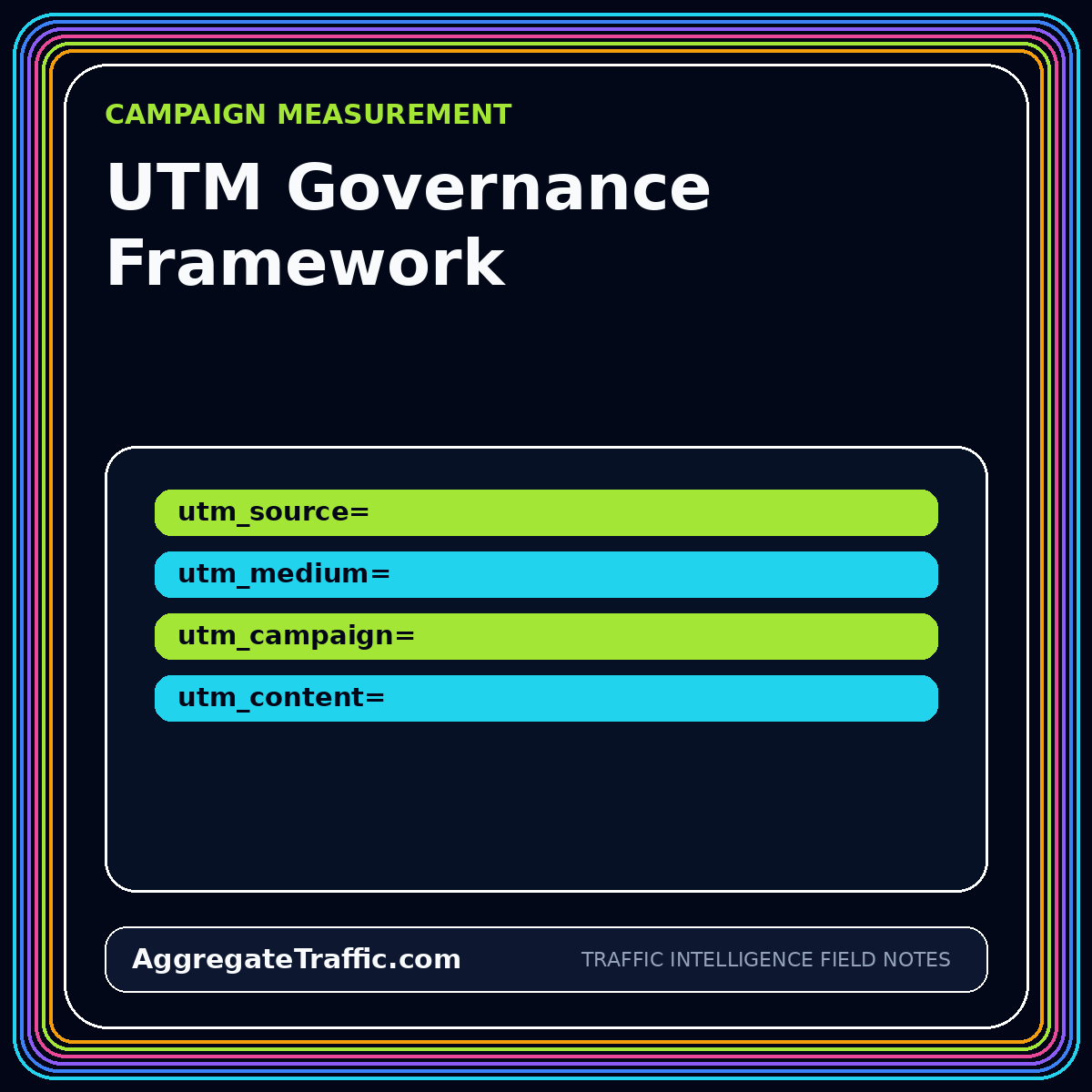
Define source, medium, channel, campaign, content, market, product, and objective fields with owners and controlled values. Use a governed link-building process for campaign parameters and a registry that connects platform IDs, display names, budgets, creative, and business objectives.
Preserve raw values and normalize them in a versioned mapping layer. Report unmapped values so taxonomy drift is corrected while campaigns are active. Do not use acquisition parameters on internal links because they can overwrite session context.
Keep platform and independent reporting distinct
Advertising platforms optimize with their own eligible interactions, identity systems, windows, and attribution models. Preserve platform-reported conversions for campaign operations, but do not add them together as a deduplicated business total. Create an independent outcome layer from the designated system of record.
Show platform outcomes, independently attributed outcomes, and raw business outcomes as separate measures. Labels should make the difference obvious to readers who do not work in analytics every day.
Use attribution as a model, not a fact
Define the outcome, eligibility, window, identity boundary, direct-traffic treatment, and model. Compare at least two plausible attribution views and report how sensitive the conclusion is to those choices. Round results to a precision supported by the data.
Use experiments or credible causal methods when the question is whether a campaign caused additional outcomes. Attribution distributes credit among observed interactions; incrementality estimates what changed because an intervention occurred.
Join organic and referral context carefully
Connect search performance and on-site behavior primarily through normalized landing pages and compatible time, country, and device dimensions. Keep impressions, clicks, sessions, and outcomes separate. Preserve unmatched rows because they often reveal property, URL, or coverage problems.
For referrals, normalize hosts, distinguish publishers and partners from technical intermediaries, and monitor self-referrals. Use governed campaign links for placements you control. Treat direct as a fallback classification that can include unobserved referral influence.
Build funnels around coherent tasks
Define the eligible population, counting unit, ordered steps, event conditions, open or closed logic, and completion window. Show counts beside rates and segment only where the difference can lead to action. Use error and loop events to understand what happened between steps.
A funnel identifies where to investigate; it does not automatically explain why visitors stopped. Combine it with experience data, support feedback, performance metrics, and research.
Connect traffic to qualified outcomes
Use stable campaign, content, product, account, or transaction keys to connect activity with downstream outcomes at a valid grain. Avoid forcing person-level identity when aggregate or account-level analysis is sufficient. Document latency between a visit and a business result.
Measure efficiency with cost, volume, quality, and capacity together. A low-cost channel that produces unqualified demand may not be efficient, while a small channel with strong qualified outcomes may deserve strategic investment.